
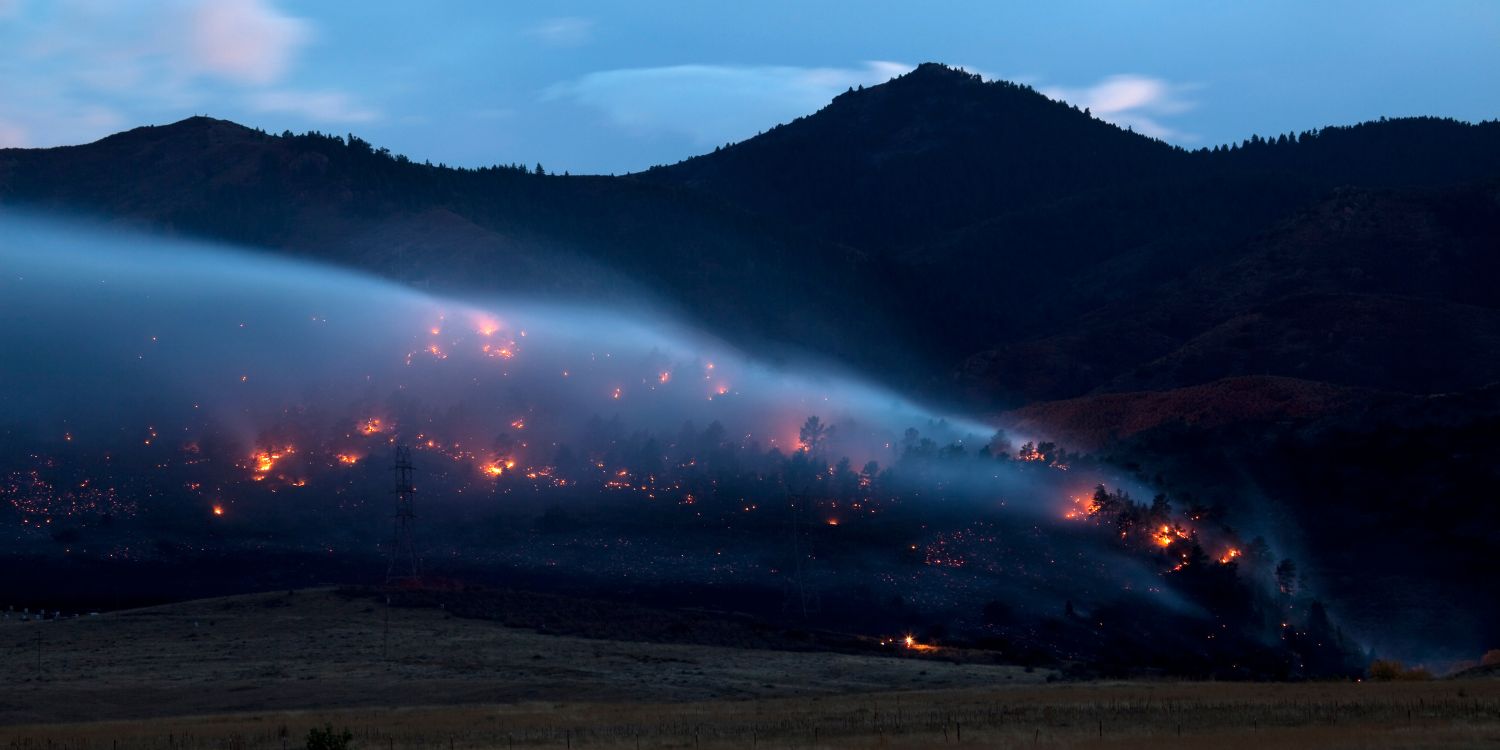
Across Colorado, commercial property owners are entering 2026 with a more complex fire and life safety review environment.
Some projects are moving forward after wildfire exposure, smoke impacts, building envelope damage, insurance repairs, or changing tenant needs. Others are being planned in jurisdictions that have recently adopted newer building and fire codes, updated local amendments, or begun implementing wildfire resiliency requirements for properties in designated wildland-urban interface areas.
For owners, developers, and property managers, this can create expensive surprises during plan review. A project that begins as a repair or reopening effort can quickly become a tenant improvement, exterior alteration, addition, change of use, or fire protection system modification that requires additional code analysis and documentation.
This guide explains what Colorado commercial building owners should watch in 2026, where projects commonly get stuck, and how a Fire Protection Engineer can help reduce redesign cycles.
What Colorado Commercial Building Owners Should Watch in 2026
For Colorado commercial building owners, the biggest 2026 code issue is not one single statewide commercial building code update. Instead, the challenge is that code requirements can vary by jurisdiction, and several important local and wildfire-related requirements may affect how repair, renovation, tenant improvement, and rebuild projects are reviewed.
Colorado cities, counties, and fire authorities generally adopt and enforce their own building and fire codes. That means a commercial project in Denver may be reviewed under a different code edition or set of local amendments than a similar project in Boulder County, Jefferson County, Colorado Springs, Fort Collins, or a mountain resort community.
In 2026, owners should confirm three things before assuming the project scope is straightforward:
- Which Authority Having Jurisdiction applies to the project
This may include a city building department, county building department, fire district, fire marshal, or special district. - Which code editions and local amendments apply
The applicable building code, fire code, existing building code, and local amendments can affect fire alarm, sprinkler, egress, occupancy, smoke control, fire department access, and documentation requirements. - Whether the property is in a designated wildland-urban interface area
Colorado’s Wildfire Resiliency Code framework may affect certain new construction, additions, significant exterior repairs, and alterations in WUI areas.
The practical takeaway: do not assume that a prior permit, prior tenant improvement, or similar project in another Colorado jurisdiction sets the standard for your 2026 project. Before design work gets too far, confirm the AHJ, adopted code edition, local amendments, WUI status, and whether the work will be treated as repair, alteration, tenant improvement, addition, or change of use.
Why Colorado Code Requirements Can Vary by Jurisdiction
Commercial building and fire code requirements in Colorado are often highly local. A city, county, or fire district may adopt a specific edition of the International Building Code, International Existing Building Code, International Fire Code, and related standards, while also applying local amendments.
Denver is a major example. The City and County of Denver adopted new building and fire codes in 2025, incorporating the 2024 International Building Code, 2024 International Existing Building Code, 2024 International Fire Code, and several other 2024 I-Codes, while continuing to use the 2021 International Energy Conservation Code with local amendments.
Jefferson County is another example of local timing. The county approved 2024 building codes and updated wildfire regulations in 2026, with the new regulations applying to permits beginning July 1, 2026. Jefferson County also notes that local fire protection districts may have authority to enforce fire code standards beyond county requirements.
For owners, this means the first step is not simply asking, “What does Colorado require?” The better question is: “What does the applicable AHJ require for this property, this scope, and this permit submission?”
Colorado Wildfire Resiliency Requirements Add Another Layer
Colorado’s Wildfire Resiliency Code is one of the most important developments for properties located in designated wildland-urban interface areas.
The code framework was created to improve life safety and property protection by reducing the risk of wildfire spreading to structures and reducing the risk of structure fires spreading to wildland fuels. Requirements may vary depending on the property’s fire intensity classification, local adoption, local mapping, and the specific scope of work.
For commercial building owners, wildfire resiliency requirements may become relevant when a project involves:
- New commercial construction in a designated WUI area
- Additions that increase building footprint
- Significant exterior repairs or alterations
- Roof replacement or major roof repair
- Exterior wall repair or replacement
- Decks, canopies, exterior stairs, or attached structures
- Post-fire or smoke-related building envelope repairs
- Site changes affecting defensible space or fire department operations
Interior-only tenant improvements may be treated differently from exterior work under wildfire resiliency requirements. However, an interior project can still trigger fire and life safety review when it changes occupant load, floor layout, fire alarm coverage, sprinkler layout, egress routes, rated separations, or the building’s use.
That distinction matters. A “simple” interior renovation may avoid WUI exterior hardening requirements but still require careful coordination under the locally adopted building and fire codes.
Why Code Classification Matters for Repairs and Tenant Improvements
Owners often describe projects in practical terms: repair, restore, reopen, renovate, re-tenant, or improve.
Plan reviewers and Authorities Having Jurisdiction usually evaluate the same project through code categories such as:
- Like-for-like repair
- Alteration
- Tenant improvement
- Addition
- Change of occupancy
- Change of use
- Change in occupant load
- Fire alarm modification
- Sprinkler or suppression system modification
- Exterior work in a designated WUI area
Those classifications can significantly affect the review process. For example, replacing damaged materials in kind may be treated differently than changing the layout, increasing occupant load, adding a new tenant, modifying an exterior wall assembly, or changing the use of a space.
A project that begins as “put the building back the way it was” may expand once ownership adds new offices, changes storage uses, updates mechanical systems, replaces exterior materials, or prepares the space for a different tenant. Once that happens, the project may need broader fire/life safety analysis and more detailed documentation than the owner originally expected.
Common Plan Review Issues for Colorado Commercial Projects in 2026
1) Unclear AHJ and Code Edition
One of the most common early mistakes is assuming that one Colorado jurisdiction will review a project the same way as another. That is not always the case.
The applicable building department, fire authority, and adopted code edition should be confirmed before the permit set is developed. This is especially important for projects near jurisdictional boundaries, in unincorporated areas, in mountain communities, or in locations served by a separate fire protection district.
Early confirmation can prevent late changes to fire alarm design, sprinkler requirements, egress plans, fire department access, and required documentation.
2) Wildland-Urban Interface Requirements for Exterior Work
For properties in designated WUI areas, exterior work can trigger requirements that may not be obvious at the start of the project.
Roof assemblies, exterior wall materials, vents, gutters, decks, exterior stairs, attached structures, and defensible space can all become part of the review. This is especially important for commercial properties in foothill communities, mountain towns, resort areas, open space edges, grassland interfaces, or jurisdictions using updated wildfire hazard mapping.
Owners planning insurance repairs, post-fire restoration, exterior envelope upgrades, or additions should evaluate WUI applicability early. Waiting until materials are selected or drawings are complete can lead to costly redesigns.
3) Fire Alarm Changes During Tenant Improvements
Tenant improvements often affect fire alarm systems even when the work seems limited.
New partitions, private offices, conference rooms, corridors, restrooms, mechanical changes, and altered common areas can require device relocations, notification coverage review, and updated fire alarm drawings. Depending on the building, the project may also require coordination with elevator recall, smoke control interfaces, duct detection, emergency voice/alarm communication systems, or other building systems.
In multi-tenant commercial buildings, fire alarm changes must be coordinated carefully so the tenant space, common areas, and base building systems remain aligned.
4) Sprinkler Modifications and Hazard Classification Changes
New layouts can affect sprinkler head spacing, obstructions, and system coverage. Changes in tenant use can also affect hazard classification, storage arrangements, and hydraulic assumptions.
For example, a standard office tenant improvement may be relatively straightforward. A conversion to retail storage, light industrial use, laboratory use, commercial kitchen use, high-piled storage, or a more complex mixed-use occupancy may require more detailed suppression review.
If the project involves post-fire repair or construction-phase system shutdowns, owners may also need impairment planning, inspection/testing documentation, and AHJ coordination before reoccupancy.
5) Egress and Occupant Load Surprises
Occupant load changes are one of the fastest ways a project can run into late plan review comments.
A new assembly space, classroom, training room, restaurant tenant, medical office, fitness use, or denser office layout can change occupant load calculations. Those changes may affect exit access travel distance, exit capacity, door swing, panic hardware, corridor ratings, fire separations, accessibility coordination, and signage.
These issues are easier to solve during concept planning than after architectural drawings are complete.
6) Fire Department Access and Water Supply Documentation
Colorado projects can involve challenging site conditions, including grade, snow, narrow access roads, constrained urban infill sites, shared drive aisles, remote mountain properties, and limited hydrant coverage.
Depending on the project location and scope, reviewers may ask for documentation related to:
- Fire apparatus access roads
- Fire lanes
- Hydrant locations
- Fire flow
- Key boxes
- Fire department connections
- Construction-phase access
- Fire protection water supply
- Emergency response coordination
Post-fire repairs and exterior reconstruction can also expose older access or water supply conditions that were never evaluated under current expectations.
How a Fire Protection Engineer Helps Reduce Redesign Cycles
A Fire Protection Engineer helps project teams identify fire and life safety issues before they become plan review comments.
For Colorado commercial projects, that support often includes:
Code strategy before design is locked in
An FPE can help determine whether the work is best classified as repair, alteration, tenant improvement, addition, change of use, or system modification. This helps owners understand what may remain existing and what may need to be upgraded.
Jurisdiction-specific review
Because Colorado requirements vary by city, county, and fire authority, an FPE can help confirm the applicable code edition, local amendments, fire district expectations, and documentation requirements.
Wildfire resiliency coordination
For WUI-area properties, an FPE can help the project team understand how exterior work, additions, roof replacement, building envelope repairs, and site conditions may intersect with Colorado wildfire resiliency requirements.
Fire protection system coordination
Fire alarm, sprinkler, suppression, standpipe, smoke control, and special hazard systems need to align with architectural, structural, mechanical, electrical, and plumbing decisions. Early coordination reduces conflicts and avoids redesign after plan submission.
Permit-ready documentation
A clear life safety plan, code narrative, basis of design, and fire protection system coordination package can reduce RFIs, reviewer confusion, and resubmittal cycles.
If the goal is to reopen quickly, re-tenant a space, or submit a stronger permit package, the best strategy is to identify fire and life safety triggers before the drawings are finalized.
2026 Planning Checklist for Colorado Commercial Building Owners
Before submitting a repair, renovation, tenant improvement, or rebuild project in Colorado, confirm the following:
- Which city, county, fire district, or other AHJ has authority over the project
- Which building, fire, and existing building code editions apply to the submission
- Whether local amendments modify the base model codes
- Whether the property is in a designated wildland-urban interface area
- Whether wildfire resiliency requirements apply to the proposed scope
- Whether the scope is truly like-for-like repair or has become an alteration, tenant improvement, addition, or change of use
- Whether exterior work could affect roof assemblies, wall assemblies, vents, decks, canopies, or defensible space
- Whether fire alarm devices, notification coverage, or control sequences need to be updated
- Whether sprinkler spacing, obstructions, hazard classification, or hydraulic assumptions are affected
- Whether occupant load, egress routes, exit capacity, rated separations, door hardware, or travel distances have changed
- Whether construction-phase fire protection impairments need to be planned and documented
- Whether fire department access, hydrant coverage, or fire flow documentation may be requested
- Whether an FPE should review the concept plan before the design team completes permit drawings
How Zari Consulting Group Helps Colorado Commercial Building Owners
Zari Consulting Group supports commercial building owners, architects, developers, and project teams with fire protection engineering and code consulting for Colorado projects.
Our services include:
- Fire alarm system design and review
- Fire sprinkler and suppression design coordination
- Life safety and code compliance strategy
- Existing building and tenant improvement code review
- Smoke control design support where applicable
- Fire/life safety narratives and permit-ready documentation
- AHJ coordination and plan review support
If you are planning a 2026 commercial project in Colorado, whether it involves post-fire repair, exterior restoration, tenant improvement, reoccupancy, or a larger rebuild, early fire protection engineering support can help reduce surprises and keep the project moving.
Contact Zari Consulting Group
Fire Protection Engineering Services
FAQ: Colorado Fire Code Considerations for Commercial Repairs and Tenant Improvements
Does Colorado have one statewide commercial building code?
Colorado does not have one universal statewide commercial building code that applies the same way to every commercial project. Building and fire codes are generally adopted and enforced by local jurisdictions, such as cities, counties, and fire authorities. Owners should confirm the applicable AHJ, code edition, and local amendments before assuming a project scope is straightforward.
Are there statewide wildfire requirements in Colorado?
Yes. Colorado created a Wildfire Resiliency Code framework for designated wildland-urban interface areas. Local jurisdictions with authority in WUI areas may be required to adopt and enforce standards that meet or exceed the state minimums. The specific impact on a project depends on the property location, local adoption, mapping, fire intensity classification, and scope of work.
Does the Colorado Wildfire Resiliency Code apply to commercial buildings?
It can. The code framework can apply to certain residential and commercial construction in designated WUI areas. For commercial owners, it is especially important to evaluate new construction, additions, significant exterior repairs, roof replacement, and alterations affecting exterior building components.
Does the wildfire code apply to interior tenant improvements?
Interior-only alterations may be treated differently from exterior work under wildfire resiliency requirements. However, interior tenant improvements can still trigger fire alarm, sprinkler, egress, occupant load, accessibility, and life safety requirements under the locally adopted building and fire codes.
Can tenant improvements trigger fire alarm or sprinkler upgrades?
Yes. Layout changes, new rooms, altered corridors, changed occupant loads, different tenant uses, or modified MEP systems can affect fire alarm coverage, sprinkler layout, hazard classification, and egress. These issues should be reviewed early in the design process.
Can post-fire repairs trigger additional code requirements?
Yes. The answer depends on the jurisdiction, the applicable code edition, the extent of damage, whether the work is like-for-like repair, and whether the scope includes exterior repairs, layout changes, tenant improvements, system modifications, additions, or a change of use.
What is the best way to avoid late plan review surprises?
Confirm the AHJ, adopted code edition, local amendments, WUI status, and project classification before the permit set is finalized. A Fire Protection Engineer can review the scope early, identify likely fire and life safety triggers, and document the basis of design clearly for plan reviewers.
Reference Sources
Sources used to ground the Colorado code timing, local adoption, and wildfire resiliency statements:
- City and County of Denver: 2025 Building and Fire Code Adoption Process
- Colorado General Assembly: SB23-166, Establishment of a Wildfire Resiliency Code Board
- Town of Superior: Colorado Wildfire Resiliency Code guidance
- City and County of Broomfield: 2025 Colorado Wildfire Resiliency Code guidance
- Jefferson County, Colorado: Adopted Building Codes and Wildfire Regulations